In practice, internship posting automation is the process universities use to manage internship opportunities through centralized workflows instead of relying on emails, spreadsheets, and disconnected job boards. As internship programs expand across departments and external partners, automation helps institutions maintain consistency, visibility, and control.
Universities that adopt structured internship systems can scale opportunities efficiently while improving the experience for students, faculty, and administrators.
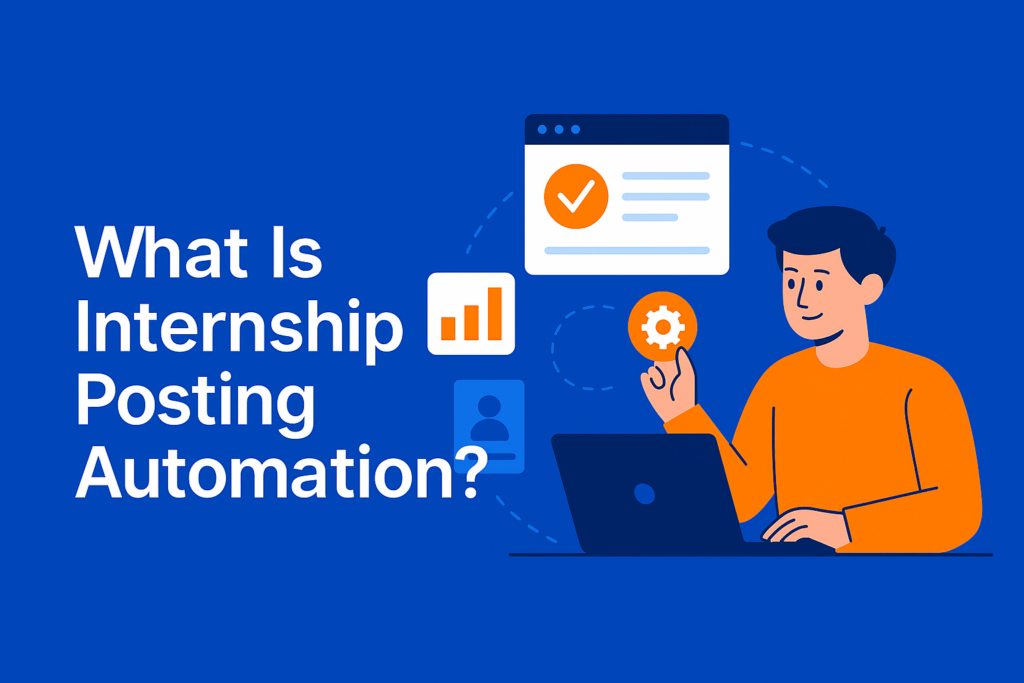
Definition of Internship Posting Automation
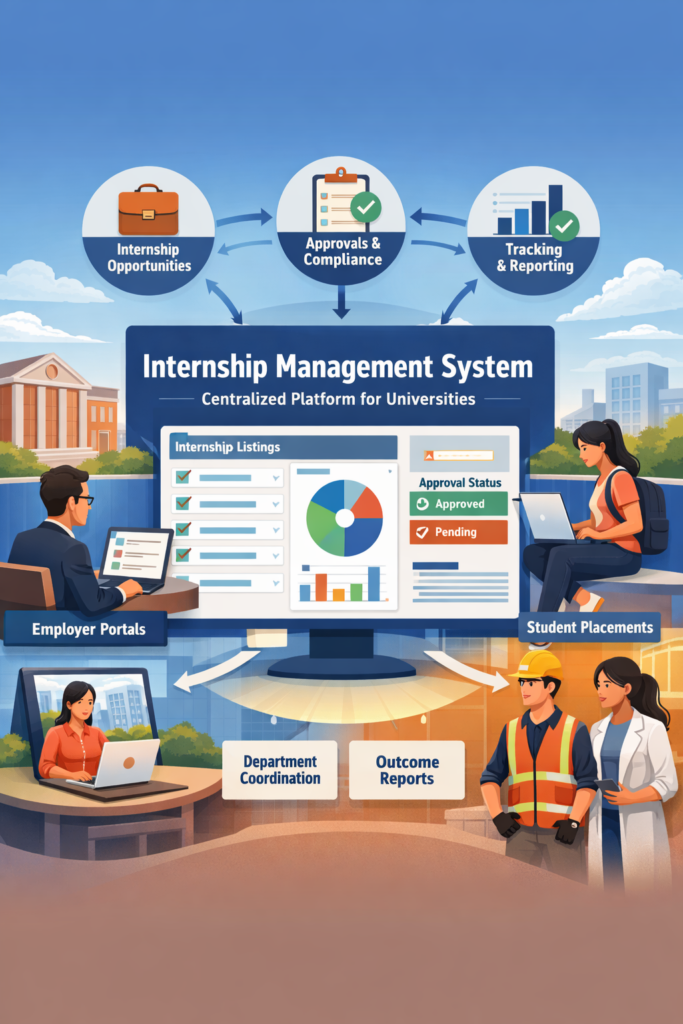
Internship posting automation refers to the use of a centralized university platform to manage the full internship lifecycle, including posting, review, approval, publishing, student applications, communication, offers, and onboarding. It replaces fragmented manual processes with structured workflows designed specifically for higher education.
PlutoEdu provides an end-to-end system that enables universities to implement internship posting automation in a controlled and scalable way.
Internship posting automation is typically one module within a broader university internship management system that handles approvals, applications, and tracking.
Why Universities Are Moving Toward Internship Automation
As a result, automated internship workflows typically follow a structured sequence:
- Employers or administrators upload opportunities into a centralized system.
- Opportunities move through configurable review and approval steps
- The system publishes approved internships to a student-facing portal.
- Students apply through a single platform
- Administrators and faculty track applications and decisions
- Selected students receive offers and complete onboarding steps
This approach ensures internships are managed consistently across academic units.
How Internship Posting Automation Works in Practice
In real-world implementations, automated internship workflows typically follow a structured process:
- Internship opportunities are uploaded into a centralized system
- Opportunities move through configurable review and approval workflows
- Approved internships are published to a student-facing portal
- Students apply through a single platform
- Administrators and faculty track applications and decisions
- Selected students receive offers and complete onboarding steps
This structured workflow allows universities to manage internships consistently across programs and academic units.
Internship Posting Automation vs Manual Internship Management
| Manual Approach | Automated Approach |
|---|---|
| Email-based job submissions | Centralized opportunity management |
| Spreadsheet tracking | Real-time dashboards |
| Inconsistent approvals | Configurable workflows |
| Scattered student access | Unified internship portal |
| Limited reporting | Structured analytics |
Automated systems enable universities to support more internships without increasing staff workload.
Who Uses Internship Automation in Universities
Internship automation supports multiple stakeholders, including:
- Career services teams
- Experiential learning offices
- Academic departments
- Faculty advisors
- University administrators
It is suitable for institutions of all sizes, from small colleges to large research universities.
Improving the Student Experience Through Automation
From the student perspective, automated internship platforms provide:
- A single place to discover verified opportunities
- Clear application requirements
- Real-time visibility into application status
- Reduced confusion caused by scattered postings
This leads to higher engagement and increased participation in experiential learning programs.
Internship Workflow Automation and Governance
At the governance level, internship automation works alongside workflow automation to enforce institutional policies. Universities can define approval paths that require departmental or faculty review before opportunities are published.
This balance allows institutions to maintain oversight while reducing delays and manual coordination.
Is Internship Automation the Same as an Internship Portal?
No.
A traditional internship portal usually focuses on listing opportunities and collecting applications.
Automated internship management systems support the entire internship lifecycle, including reviews, approvals, communication, offers, onboarding, and reporting. Platforms like PlutoEdu are designed to manage this full lifecycle rather than acting as simple job boards.
Internship Automation and Experiential Learning
Internship automation aligns closely with experiential learning practices used in higher education. By improving access to structured opportunities, universities can better support applied learning, career readiness, and student success.
(Reference: experiential learning practices – AAC&U High-Impact Practices)
Why Internship Posting Automation Is Becoming Standard
Over time, as universities place greater emphasis on employability and career outcomes, internship programs continue to grow. Manual systems struggle to keep pace with this expansion.
Automated internship management enables institutions to:
- Support more opportunities without additional staff
- Maintain compliance and oversight
- Improve collaboration across departments
- Generate data-driven insights
For these reasons, internship automation is becoming a foundational capability in modern higher education systems.
PlutoEdu is an internship management system for universities designed to manage internship workflows, approvals, student matching, and reporting in one platform.
Once internships are posted through automated workflows, universities use internship tracking and reporting to understand application trends and internship outcomes.
Frequently Asked Questions (FAQs)
internship automation is the use of a centralized university platform to manage the full lifecycle of internship opportunities, including posting, review, approval, publishing, student applications, communication, offers, and onboarding. It replaces manual processes such as email-based job posting and spreadsheet tracking with structured workflows.
Internship posting automation works through structured workflows where internship opportunities are uploaded into a centralized system, reviewed and approved, published to students, and tracked through applications, offers, and onboarding.
No. A traditional internship portal typically focuses on listing opportunities and collecting applications. Internship lifecycle automation manages the entire internship lifecycle, including reviews, approvals, communication, offers, onboarding, and reporting.
Universities use internship posting automation to reduce administrative workload, standardize approvals, centralize opportunities, improve visibility for students, and scale internship programs efficiently across departments.
PlutoEdu provides an end-to-end system designed specifically for universities to implement internship posting automation through centralized workflows, visibility across stakeholders, and structured lifecycle management.
Conclusion
Internship posting automation provides universities with a scalable, efficient way to manage internship programs while improving visibility and coordination. By replacing manual processes with structured digital workflows, institutions gain greater control and consistency across the internship lifecycle.
For a practical implementation, see how universities use automated internship management in practice:
👉 https://blog.plutoedu.com/2025/12/12/internship-posting-automation-for-universities/
PlutoEdu delivers a purpose-built platform that supports internship automation in a way that aligns with academic structures and institutional needs.