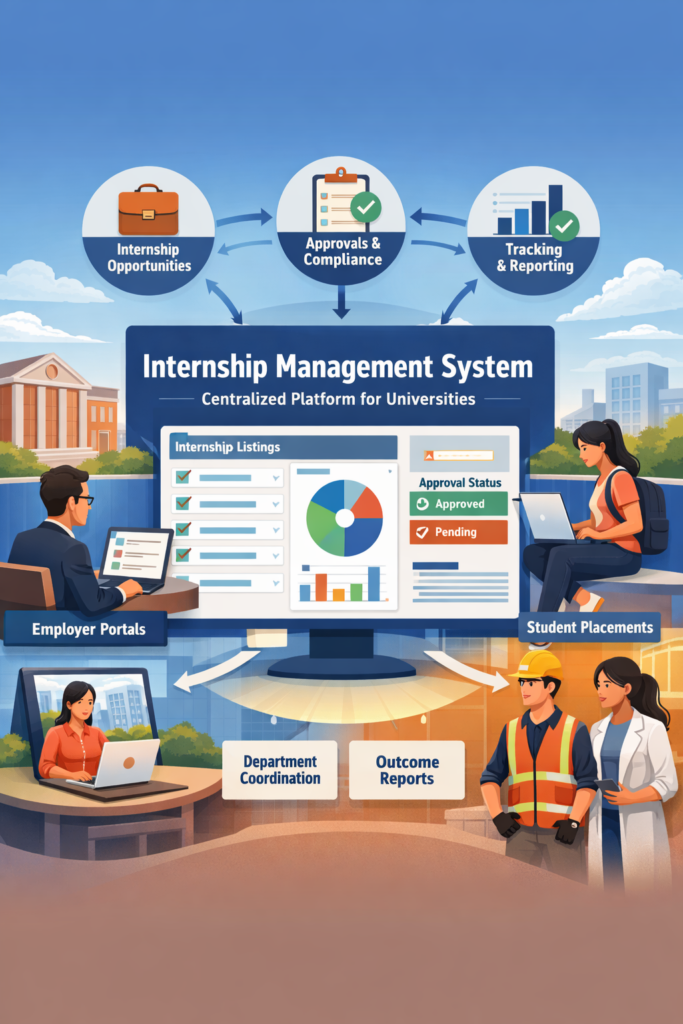
Universities receive internship opportunities from employers, faculty referrals, job platforms, and increasingly from scraped external sources. Without a structured internship approval workflow, career offices struggle with delays, inconsistent decisions, and limited visibility into which internships are safe, compliant, and academically relevant.
An internship approval workflow for universities is the structured process institutions use to review, validate, and approve internship opportunities before publishing them to students.
This guide explains how internship approval workflows work in universities, why manual processes fail, and how modern institutions automate approvals as part of a complete internship management system.
What Is an Internship Approval Workflow?
An internship approval workflow is the structured process universities use to review, validate, and approve internship opportunities before publishing them to students. It ensures internships meet academic standards, employer credibility requirements, compliance policies, and student eligibility rules, replacing ad-hoc approvals handled through emails and spreadsheets.
This workflow is a critical component of any university internship management system.
These approval processes are typically managed within a centralized internship management system for universities, rather than through emails or spreadsheets.
Why Internship Approval Breaks Down at Universities
Many universities still rely on informal or semi-manual approval processes. Common challenges include:
- Internship details arriving via email, PDFs, or shared spreadsheets
- No standard criteria for approving or rejecting opportunities
- Multiple stakeholders reviewing the same internship independently
- Delays caused by unclear ownership or missing information
- No audit trail for who approved what and when
As internship volume increases, these issues directly impact students, who miss deadlines or apply to unverified opportunities.
Typical Internship Approval Workflow in Universities
While workflows vary by institution, most universities follow a similar approval lifecycle.
Step 1: Internship Intake
Internship opportunities enter the system from:
- Employer submissions
- Faculty referrals
- Career office uploads
- External platforms or scraped job sources
Step 2: Initial Validation
Basic checks are performed:
- Is the employer legitimate?
- Are required fields complete?
- Does the internship meet minimum academic criteria?
Step 3: Academic or Career Office Review
Designated reviewers evaluate:
- Learning outcomes
- Relevance to academic programs
- Internship duration, location, and compensation
- Compliance with university policies
Step 4: Conditional Review (If Required)
Some internships may require:
- Faculty advisor approval
- Department-level sign-off
- Legal or compliance checks
Step 5: Approval or Rejection
Internships are:
- Approved for publication
- Sent back for revision
- Rejected with documented reasons
Step 6: Publication to Students
Approved internships become visible to eligible students through the student portal.
Once approved, internships move seamlessly into internship posting automation, where they are published to eligible students without manual intervention.
Step 7: Audit and Reporting
Universities track:
- Approval timelines
- Reviewer actions
- Internship outcomes
This structured flow replaces fragmented decision-making with accountability and transparency.
Who Is Involved in the Internship Approval Workflow?
An effective internship approval workflow clearly defines roles:
- Career Office – Oversees intake, quality control, and publishing
- Faculty Members – Validate academic relevance and learning value
- Department Administrators – Apply program-specific rules
- Compliance or Legal Teams (optional) – Review high-risk internships
- Students – View only approved, eligible opportunities
Role clarity is essential for scalability.
Manual vs Automated Internship Approval Workflow
| Manual Approval Process | Automated Approval Workflow |
|---|---|
| Email-based reviews | Centralized review dashboard |
| No standard criteria | Configurable approval rules |
| Slow response times | Faster, tracked approvals |
| Limited visibility | Full audit trail |
| Hard to scale | Designed for high volume |
Automation removes bottlenecks while maintaining academic control.
How Internship Approval Fits Into an Internship Management System
Internship approval is not a standalone task. It sits at the core of the broader internship lifecycle, which includes:
- Internship sourcing and intake
- Approval workflows
- Student eligibility and matching
- Applications and shortlisting
- Communication and notifications
- Offers and placement tracking
- Reporting and analytics
Internship approval is not a standalone task. It sits at the core of a broader internship management system that universities use to manage the full internship lifecycle, including sourcing, approvals, student eligibility, applications, communication, offers, and reporting.
How PlutoEdu Supports Internship Approval Workflows
PlutoEdu provides configurable internship approval workflows designed specifically for universities. Institutions can:
- Define multi-level approval paths by role or department
- Standardize approval criteria across programs
- Track approval status in real time
- Maintain a complete audit trail
- Automatically publish approved internships to eligible students
By embedding approval workflows into a centralized internship management system, universities reduce delays while maintaining academic oversight.
After internships are approved and published, career offices rely on internship tracking and reporting to monitor applications, placements, and outcomes.
Frequently Asked Questions (FAQs)
An internship approval workflow is the structured process universities use to review and approve internship opportunities before making them available to students.
Approvals typically involve career offices, faculty members, department administrators, and sometimes compliance or legal teams.
Yes. Modern internship management systems support automated and configurable approval workflows with role-based reviews.
Most universities require internships to be approved to ensure quality, compliance, and academic relevance before students apply.
Approved internships reduce risk, improve learning quality, and ensure students apply only to vetted opportunities.
Final Thoughts
As internship volumes grow and universities aggregate opportunities from multiple sources, a structured internship approval workflow becomes essential. Institutions that move beyond email-based approvals gain speed, transparency, and control — while protecting students and academic standards.
Internship approval is no longer an administrative task. It is a foundational component of modern internship management.